HOME   ABOUT ME   BLOG REVIEW INFO   BOOK REVIEW INDEX   GIVEAWAYS
Showing posts with label A Series of Unfortunate Events. Show all posts

Friday, January 4, 2019

Book Review: The Slippery Slope (A Series of Unfortunate Events #10)

Release Date: September 23, 2003
Author: Lemony Snicket
Publisher: HarperCollins Publishers
Length: 337 pages
Source: Purchased Book

Dear Reader,
Like handshakes, house pets, or raw carrots, many things are preferable when not slippery. Unfortunately, in this miserable volume, I am afraid that Violet, Klaus, and Sunny Baudelaire run into more than their fair share of slipperiness during their harrowing journey up--and down--a range of strange and distressing mountains.
In order to spare you any further repulsion, it would be best not to mention any of the unpleasant details of this story, particularly a secret message, a toboggan, a deceitful map, a swarm of snow gnats, a scheming villain, a troupe of organized youngsters, a covered casserole dish, and a surprising survivor of a terrible fire.
Unfortunately, I have dedicated my life to researching and recording the sad tale of the Baudelaire orphans. There is no reason for you to dedicate your-self to such things, and you might instead dedicate yourself to letting this slippery book slip from your hands into a nearby trash receptacle, or deep pit.
With all due respect,
Lemony Snicket


Review:

Protagonists: As the last installment left off, 2/3rds of our heroes headed toward certain doom, I will ease your suffering now and tell you that they survive the start of this most unfortunate journey. However, this tale of the Mortmain Mountains and what the Baudelaire's discovered there, like so many installments before, isn't a happy tale. In this installment, our heroes are still struggling between right and wrong, or more accurately, between selfish deeds and selfless ones.  As with other installments this late into the series that attempt to provide some actual character development into the story, I have to say that I appreciate the attempt, but the struggle feels hollow when it's not fleshed out more and explored. It ends up feeling more like a large game of chicken rather than a struggle with a hard choice. I will admit that it was nice seeing them interact with someone around their own age as they haven't really had a chance to do that since the Quagmire triplets had to escape.

World Building: Taking place in a dark and dangerous mountain range and probably one of the most secluded locations the Baudelaire's have visited,  this installment starts to flesh out the world a lot more. While many questions still remain, this installment begins answering questions on the mind of readers since Duncan and Isadora were kidnapped by Count Olaf shouting three letters at the Baudelaires. This is actually sort of the beginning of the end, as this is the start of as much clarification on this world, and these mysteries that have been brewing for many books, that we will get in this series. I will bring up again though, that I wish there was more depth to the world that we get. I know this series is supposed to be absurdist and out there and a more concrete world could conflict with that style, yet the Netflix series adds depth to the stories while still keeping the absurdist and dark comedy that made this series so popular in the first place. Granted I shouldn't be comparing the two since this came out first and because so it has not exactly aged very well.

Predictability: I actually forgot a good deal about this installment. However, that didn't stop me from knowing most of the important information and twists that this story held, mainly because there aren't many. Due to the nature of these stories, it's not hard to predict what turmoil the story will take next and what small reprieves the children may be given. There is a pretty big twist in this tale for those who haven't read this book before and it's a really great twist too, but it's probably the only surprising thing in the entire story.

Ending: So, honestly, while there are a few insane things that happen at the end of this story, there's nothing to make the twists feel like they count. I guess when you have a series of unfortunate events, another unfortunate event, no matter how unpredictable, though this one is pretty predictable, doesn't hold as much weight when stacked up against other unfortunate events. The final climax was pretty good, and there are a few changes to the typical formula of this series, but at the end of the day, while the ending is pretty exciting, compared to the other ending in this series so far, it feels a tad underwhelming.

Rating:


So, while this is the beginning of the end, and answers are coming, at least a few answers are coming, and things are getting more intense, but still as with the other installments in this series it feels that the depth of the story is sacrificed for the absurdist comedy and "brand" of this series.

POST SIGNATURE

Friday, March 23, 2018

Book Review: The Carnivorous Carnival (A Series of Unfortunate Events #9)

Release Date: October 17, 2002
Author: Lemony Snicket
Publisher: HarperCollins
Length: 286 pages
Source: Purchased Book/Library Audiobook

Dear Reader,

The word "carnivorous," which appears in the title of this book, means "meat-eating," and once you have read such a bloodthirsty word, there is no reason to read any further. This carnivorous volume contains such a distressing story that consuming any of its contents would be far more stomach-turning than even the most imbalanced meal.
To avoid causing discomfort, it would be best if I didn't mention any of the unnerving ingredients of this story, particularly a confusing map, an ambidextrous person, an unruly crowd, a wooden plank, and Chabo the Wolf Baby.
Sadly for me, my time is filled with researching and recording the displeasing and disenchanting lives of the Baudelaire orphans. But your time might be better filled with something more palatable, such as eating your vegetables, or feeding them to someone else.

With all due respect,
Lemony Snicket.


Review:

Protagonists: So, for a while there I was really doubting if I actually read any character development with the three Baudelaire children later in the series. I mean, I know that Sunny has a bit of development in the later books, first foreshadowed in this one actually, but I wasn't sure if as I child I had just filled in the blanks in my head or not. Luckily, when I reread the previous installment, I was happy to finally find some internal conflict with these characters, though part of me doubted if it would continue, and luckily again, it does. In this story, the Baudelaires face a lot of internal conflict as they've sort of turned the tables on Count Olaf, and are now the ones following him and dressing up in disguises. However, the parallels are not lost on them and they are forced to make many difficult decisions, which, unfortunately, or maybe fortunately for me, forces them to look at their own morality and wonder if they've crossed a line. I was happy to get more internal conflict with these characters, and while I do wish there was more individuality among them, other than their personal talents, I did enjoy seeing some real character development with them.

World Building: So, while I gave the series a lot of flack for its underdeveloped world in previous reviews, and that is sort of true here, I did feel we got a bit more world-building in this story, a lot more actually, now that I think about it. In the past things would just sort of feel vague and hand waved and just a bit too simplistic, however in this book we do learn more about the world, or I guess we learn more about VFD and a lot of the mysteries that have been building up for some time, we learn answers to questions that I'm sure many a reader has had since as early as The Wide Window or  The Miserable Mill. That all being said, I wish I understood better how this world worked, I wish we knew where this story takes place, if it even takes place in our world, or just one like it lost to time. I just feel like the world itself could have been handled a bit better.

Foreshadowing: So, I didn't really notice that much foreshadowing for future books in this installment. I mean sure there are questions brought up that I know will be answered later, but I couldn't pick up on any Easter Eggs for future books like I could with The Hostile Hospital. As for foreshadowing for this specific book, well Lemony Snicket does a fantastic job once again of telling just enough of the story ahead of time to give you fair warning, but at the same time keep enough suspense to drive you further along in the series.

Ending: Once again things are shaken up a bit here at the end. With a rather riotous finale that I was excited to see had callbacks to previous events in the series, followed by more and more unfortunate events, the climax really ended with a bang. There is a small cooldown period where things look a bit dicey but mostly safe, only to find the Baudelaires in their most unfortunate ending yet. This ends the arc that Season 2 of the Netflix series will cover, and with it, and based on the end of the first season, I have an idea about how it will end using my knowledge of the rest of the series, and if it ends how I think it will, it'll have those not in the know freaking out!

Rating:


I thought about giving this story 5, or even 4.5 stars, and while I really enjoyed this installment upon a reread, I just can't help but feel like we aren't getting enough. I mean, we finally get more character development and more world-building, but after looking it over we don't get that much, it only felt like a lot at the time because there wasn't that much in the beginning of the series, and it didn't feel right giving this book a higher star rating, on par with a lot better books, just because it's incrementally getting better.

POST SIGNATURE

Friday, March 9, 2018

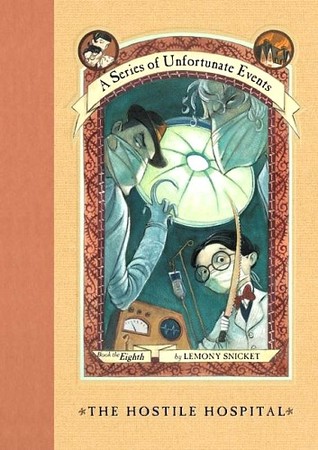
Book Review: The Hostile Hospital (A Series of Unfortunate Events #8)

Release Date: January 31, 2001
Author: Lemony Snicket
Publisher: HarperCollins
Length: 255 pages
Source: Purchased Book/Library Audiobook

Dear Reader,

Before you throw this awful book to the ground and run as far away from it as possible, you should probably know why. This book is the only one which describes every last detail of the Baudelaire children's miserable stay at Heimlich Hospital, which makes it one of the most dreadful books in the world.

There are many pleasant things to read about, but this book contains none of them. Within its pages are such burdensome details as a suspicious shopkeeper, unnecessary surgery, an intercom system, anesthesia, heart-shaped balloons, and some very startling news about a fire. Clearly, you do not want to read about such things.

I have sworn to research this story, and to write it down as best I can, so I should know that this book is something best left on the ground, where you undoubtedly found it.

With all due respect,

Lemony Snicket


Review:

Characters: Okay, so I've been really bummed that the Baudelaires were extremely underdeveloped in the previous books. One of my biggest problems with their characters is that all of their conflicts come from an external source. We don't get to see them really struggle with certain things or have a large range of emotions, a lot of the time they're either scared, happy, or just content. Also, going along the lines of the fact that they are severely underdeveloped, we don't get to see a range of interests, it's gotten to the point where, when we are reminded of the children's individual talents, I sort of just groan and go, "I get it, Violet's an inventor, Klaus is a researcher, and Sunny likes to bite things!" That all being said about previous installments in this series, this book does slowly, and honestly not that much but I'll take all I can get, develop the kids and we finally get to see a bit of internal conflict with them as, now that they are on the run, and apparently live in a world full of idiotic adults, they make some morally gray decisions to understand what's going on.

World Building: Have I talked about how bland and boring the world building is yet. I mean in the series overall. I liked the sort of timeless or I guess a more apt description is old-timey, not timeless, feel to the world when I first started rereading the series, but it's just sort of gotten boring at this point. I get that this is a series for children, but I've read plenty of "children's" books that don't dumb things down, or resort to the "children are smart, adults are idiots" trope. Actually the more I think about it the more I feel that it would be amazing if the author rewrote the series for an older audience, expanding the stories and adding a sense of authenticity to the plot. He could flesh out the characters, build out the world, and really dive deep into the fascinating lore of the world. Though I guess the Netflix series does a pretty good job of that, so maybe not.

Foreshadowing: So, I never really noticed this in the previous installments, and maybe this installment is just a turning point for the series as a whole, but there's a lot of foreshadowing in this book. Not just for this particular installment, but for most of the rest of the series as a whole. There are little things that, if you're rereading the series like I am, they kind of make you pause and think about certain plot points for the rest of the series that you wouldn't think about before. Certain descriptions, similes, or anecdotes the author provides in this book really caught me by surprise and made me smile in that nostalgic way when I read them/or a guess listened to them since I read the audiobook (which I highly recommend as Tim Curry is a brilliant narrator for these books.)

Ending: This has got to be one of the best endings for the series as more so than ever the formula is shaken up, We see the children take some agency in their story and it leads them to a very interesting shelter, or I guess makeshift shelter. The final climax of the book was rather typical and honestly didn't have a lot of real-world authenticity to it, but again it's a kid's book, I just wish some of it was grounded in reality because if children reading this book tried to recreate something that happens at the end it could lead to some very serious injuries. The ending is a fantastic cliffhanger as the children find themselves in the most dangerous situation yet.

Rating:


I'm honestly surprised that I'm giving this book as high a rating as I am. I always thought that The Austere Academy was my favorite from this series and I do believe that there are a lot of great things about that book, particularly the setting, but in terms of finally feeling like this series is going somewhere and shaking things up, this might be the best one. Woah!

POST SIGNATURE

Friday, February 23, 2018

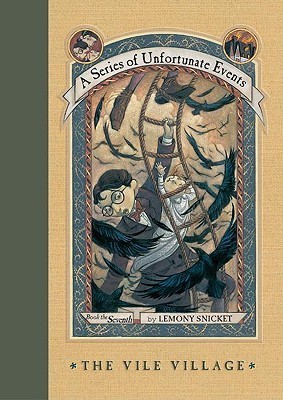
Book Review: The Vile Village (A Series of Unfortunate Events #7)

Release Date: April 24, 2001
Author: Lemony Snicket
Publisher: HarperCollins Publishers
Length: 272 pages
Source: Purchased Book

Dear Reader,

You have undoubtedly picked up this book by mistake, so please put it down. Nobody in their right mind would read this particular book about the lives of Violet, Klaus, and Sunny Baudelaire on purpose, because each dismal moment of their stay in the village of V.F.D. has been faithfully and dreadfully recorded in these pages. I can think of no single reason why anyone would want to open a book containing such unpleasant matters as migrating crows, an angry mob, a newspaper headline, the arrest of innocent people, the Deluxe Cell, and some very strange hats. It is my solemn and sacred occupation to research each detail of the Baudelaire children's lives and write them all down, but you may prefer to do some other solemn and sacred thing, such as reading another book instead.

With all due respect,

Lemony Snicket


Review:

Protagonists: Once again I'm sad to inform you that while the Baudelaire children are once again made subject to a dreadful tale of events, they still possess no more substance of character than in previous books. These smart and charming children once again use their personal talents to try as hard as hey can to thwart their pursuers for good. Honestly, I'm considering getting rid of this section on reviews for these books until there is actual character development. I was rewatching the Netflix series the other day and, while it's not perfect, the characters at least seem to have some substance to them as opposed to their novel counterparts. While I was reading this story all I could think was about how interesting the Netflix adaptation of this story would be with characters that felt more real.

World Building: In this story, our hero and heroines find themselves without any more family members willing to risk a run in with Count Olaf. As such they are given the choice of which village will act as their guardian, after all "it takes a village." After scanning the brochure they choose the most interesting one, V.F.D. They hope to find answers in this town but they may just be barking up the wrong tree. We don't learn more about the real V.F.D. here, or, well, we do, just nothing substantial. However, there are some interesting story developments. In fact, this is a pivotal installment in the series for multiple reasons, the least of which is that after this book the formula will be shaken up quite a bit.

Foreshadowing: The foreshadowing in this book is actually pretty subtle. In previous installments, it could get a bit heavy-handed, but here well, there isn't all that much to point out where things are going. As I said the formula is going to get shaken up a bit and because of that there's a lot in this story that I honestly believe if you've never read this installment, or any that came after this one, you'd really be shocked at how everything goes down.

Ending: This ending is one that has always stuck out to me since it's the beginning of this series break with conventions. This tale doesn't end like the ones previous and in fact, as I've said ad nauseam, sets off a chain of events that will ripple forward till the very end of this series. In fact, I was surprised that the Netflix series decided not to end season two here, as it does sort of end one arc of the story, instead, they pushed forward a couple more installments so I'll be interested to see how season two ends, mainly because I forgot how The Carnivorous Carnival ends.

Rating:


Once again, I couldn't bring myself to give this book five stars. Even though this is one of my favorite installments, the fact that the children felt like two-dimensional characters is still something I couldn't get past. I get it, Violet is an inventor, Klaus is a researcher, and Sunny likes to bite things, show more depth in these characters, please!

POST SIGNATURE

Friday, February 9, 2018

Book Review: The Ersatz Elevator (A Series of Unfortunate Events #6)

Release Date: February 20, 2001
Author: Lemony Snicket
Publisher: HarperCollins Publishers
Length: 259 pages
Source: Purchased Book

Dear Reader,

If you have just picked up this book, then it is not too late to put it back down. Like the previous books in A SERIES OF UNFORTUNATE EVENTS, there is nothing to be found in these pages but misery, despair, and discomfort, and you still have time to choose something else to read.

Within the chapters of this story, Violet, Klaus, and Sunny Baudelaire encounter a darkened staircase, a red herring, some friends in a dire situation, three mysterious initials, a liar with an evil scheme, a secret passageway, and parsley soda.

I have sworn to write down these tales of the Baudelaire orphans so the general public will know each terrible thing that has happened to them, but if you decide to read something else instead, you will save yourself from a heapful of horror and woe.

With all due respect,

Lemony Snicket


Review:

Protagonists: After the austere events of the previous book, the Baudelaire children are sent to live with Jerome and Esme Squalor, but of course Count Olaf is still right on their heels but this time there's something the Baudelaires want from Count Olaf, the freedom of their friends Duncan and Isadora Quagmire. I want to say that because Count Olaf has in his captivity, two of the Baudelaires' friends that Violet, Klaus, and Sunny were in a different predicament than during their previous adventures, but I can only say that it's slightly different, as the fact that Count Olaf had their friends didn't really affect their initial actions. I probably sound like a broken record by now, but I just wish there were more substance to these characters. I get it, Violet is an inventor, Klaus is a researcher, and Sunny likes to bite things with her sharp teeth, other than a series of unfortunate things happening to them, we get no other characterization for most of this book, let alone the series so far. There is a small amount of something I guess I would call character development in this book... I guess, when the Baudelaires begin to think about timing when it comes to their respective skills, and Sunny does play a larger role in the solutions than usual, but their characters don't exactly develop, just sort of get shaken a bit.

World Building: This story is more or less a return to form, Baudelaires get sent to a new guardian, Count Olaf shows up in disguise, etc. etc. However, I do have to say that the story is a bit longer and that does lead to some interesting developments in the story so far, however, those will be touched on in the next section. One of the things I found interesting was that it was revealed very early on in this story that Jerome and Esme live close to where the Baudelaires once did, but nothing really came of it. I would have liked to see something from their life before the fire, friends, favorite spots to hang out other than a gloomy beach, something to get a better sense of their life before the fire, other than fortunate. I know that I'm now reading these stories with the eyes of an adult, and I did enjoy these stories very much as a child, but I forgot how much substance they lacked in terms of both the characters and the world.

Foreshadowing: This was the shining star of this book. Now, going into this story I have already read it, and it's one of the last installments that I can remember very well, so when I picked up on all the little bits of foreshadowing that I never noticed the first time I read the story, I was astounded. There are some very well placed twists in this story, things that help expand the story, even though they only do so in small ways.

Ending: Once again, I probably should have left the ending off of this review. There is a great final climax, and honestly, I remember as a kid being so anxious about the outcome, there were more books in the series at that time so I knew there would be a more standard ASoUE ending to this tale, but the final climax made me hope for a small ray of hope in a sea of despair. The rest of the ending as you may probably guess was pretty standard, still, I did like how things were shaken up quite a bit toward the end.

Rating:


The only reason this story is getting three stars is that after the events of the previous book, plus the set up to this tale as well, there was so much the author could have explored and just didn't seem to, I felt like I had a great deal of interesting set up, not pay off, yet still an interesting story, just a tad on the bland side.

POST SIGNATURE

Friday, January 26, 2018

Book Review: The Austere Academy (A Series of Unfortunate Events #5)

Release Date: August 31, 2000
Author: Lemony Snicket
Publisher: HarperCollins Publishers
Length: 221 pages
Source: Purchased Book

Violet, Klaus, and Sunny are at first optimistic--attending school is a welcome change for the book-loving trio, and the academy is allegedly safe from the dreaded Count Olaf, who is after their fortune.

Dear Reader,

If you are looking for a story about cheerful youngsters spending a jolly time at boarding school, look elsewhere. Violet, Klaus, and Sunny Baudelaire are intelligent and resourceful children, and you might expect that they would do very well at school. Don't. For the Baudelaires, school turns out to be another miserable episode in their unlucky lives.

Truth be told, within the chapters that make up this dreadful story, the children will face snapping crabs, strict punishments, dripping fungus, comprehensive exams, violin recitals, S.O.R.E., and the metric system.

It is my solemn duty to stay up all night researching and writing the history of these three hapless youngsters, but you may be more comfortable getting a good night's sleep. In that case, you should probably choose some other book.

With all due respect,
Lemony Snicket


Review:

Protagonists: After their escapades at the Luck Smells Lumber Mill, the Baudelaires are sent to a very austere boarding school. This is the first time that they haven't had a guardian, good or otherwise, and their Vice Principal is an egotistical jerk, their teachers are rather boring, and there's a little girl who won't stop calling them cake sniffers. Once again times are trying for the children, and that doesn't even include when Count Olaf manages to find them yet again. Things are a bit different this time. While the children do still rely on their individual talents to get them through yet another series of unfortunate events, they aren't completely alone this time. This time the Baudelaires meet some friends who can empathize with their misfortune and have special interests of their own. It was great seeing Violet, Klaus, and Sunny interact with kids their own age and have the chance to show the kids in a less repetitive light. Look, these kids still haven't developed much since the beginning of the series, I mean, yeah bad things have happened to them, but they always find their way out, Count Olaf always finds them again, and repeat. Because the characters are so simply written there isn't any time for depth or actual development in their characters. As someone who's read this series before, I know that certain characters do get developed, but it takes a long time.

World Building: I love boarding school set books, I don't know why I just do. This is by far my favorite book in the series in terms of the world because so much, though honestly after rereading it, not as much as I thought, happens in this book. This is the first book where the formula gets shaken up. The children don't have a legal guardian in this book, they handle finding Count Olaf differently, and there's actual world development in this story as well. I won't say too much in case you haven't read the book before, but the question of who Count Olaf is, in relation to the children, their parents, and on a personal level is brought up in this story, and where there's smoke there's fire. This story isn't as long as I remember and because of the length, even though the classic formula gets shaken up quite a bit and we finally have even a modicum of story progress, we don't get that much to set it apart from the other rather formulaic books in the series.

Foreshadowing: Because I've read this book before I was never really all that surprised by where the story went, but I was able to sort of sit back and bask in the foreshadowing, or well I would have if there had been more foreshadowing. As I read the story I could only really see where things were going because either I'd already read the book, or it was so completely obvious. Even the big twists of this book didn't really seem to have foreshadowing attached to them. They just sort of happened on a dime without a lot of preamble.

Ending: For the first time in a while I can talk about the ending of one of these books. Though again, this story is so short that even though things happen at the end, things that shake up the formula, there isn't really a final climax, unless you feel that attempting to unmask Count Olaf is a final climax. There is more of a cliffhanger to this story and with it a shift in this series storytelling. This story doesn't simply end with the Baudelaires needing a new guardian and Count Olaf getting away, this time things become much more unfortunate.

Rating:


I'm still giving these books lower ratings than I thought because as a child I never realized just how repetitive, even with a book as game-changing as this one, this series is and I never noticed how flat these characters are. I care for the Baudelaires sure, but honestly, I just wish they were fleshed out a bit more and felt like more three- dimensional characters.

POST SIGNATURE

Friday, January 6, 2017

Book Review: The Miserable Mill (A Series of Unfortunate Events #4)

Release Date: April 5, 2000
Author: Lemony Snicket
Publisher: HarperCollins
Length: 194 pages
Source: Purchased Book

Dear Reader,

I hope, for your sake, that you have not chosen to read this book because you are in the mood for a pleasant experience. If this is the case, I advise you to put this book down instantaneously, because of all the books describing the unhappy lives of the Baudelaire orphans, The Miserable Mill might be the unhappiest yet. Violet, Klaus, and Sunny Baudelaire are sent to Paltryville to work in a lumber mill, and they find disaster and misfortune lurking behind every log.

The pages of this book, I'm sorry to inform you, contain such unpleasantries as a giant pincher machine, a bad casserole, a man with a cloud of smoke where his head should be, a hypnotist, a terrible accident resulting in injury, and coupons.

I have promised to write down the entire history of these three poor children, but you haven't, so if you prefer stories that are more heartwarming, please feel free to make another selection.

With all due respect,

Lemony Snicket


Review:

Protagonists: After escaping Count Olaf for the third time, the Baudelaire children find themselves employed at the Lucky Smells Lumbermill, where their new guardian, Sir, is the owner. While the work is backbreaking, and the foreman is a real piece of work, the children are happy to be free of Count Olaf, at least for a while. There's a weird building across the street from the mill that is suspiciously shaped like the tattoo on Count Olaf's ankle, and after Klaus pays a visit to this building strange things start to happen. Is Count Olaf actually closer than they think? Okay, so this is the fourth book in this series that I've reviewed after deciding to reread this series, and I'm sad to see that there wasn't as much development in the children as I thought early on. However, this book does have a glimmer of development for our heroes as they have to rely on skill sets that are out of their comfort zone. I really enjoyed this small break from the wash, rinse, repeat storytelling that we had with these adventures so far.

World Building: Much like with the character development there is a bit of a break in form for the overall storytelling as well. While I've seen that this is many people's least favorite installment in the series, and it wasn't really a favorite of mine as a child either, as an adult, I can appreciate that the author decided to ditch the very cookie cutter pacing of the other books and present an adventure in this series that's a bit different. To start off, while in books two and three of this series the children had loving, if not a bit insipid, guardians, in this adventure we hardly ever get to see their guardian and instead of a nice home they work in a lumbermill preparing logs into suitable building materials. Also, count Olaf's first appearance feels a bit different. It's not something that happens almost immediately and it actually takes a little while before we find out how he's disguised himself this time. The story itself is a bit boring, however, for me, it was saved by how the author shook things up. P.S. Is it just me or does anyone else find it weird that the children can immediately spot Count Olaf in his disguise, but never one of this associates?

Foreshadowing: Once again Snicket employs fantastic allegories that always seem to become important later in the story. While after a fairly repetitive story cycle I could see readers thinking they could know exactly where things are headed in this installment, for first-time readers I think there are a few surprises. In fact, even though I've read this book before, it's been so long that I was actually rather surprised with how certain things came into play. It's still a fairly predictable adventure, but there are some nice refreshing twists in there to keep it interesting enough.

Rating:


Once again I've left out the ending section because there wasn't really any need for it and I wasn't going to babble on just to fill a spot. That being said though I ended up liking this installment better than when I first read it. As I said in my full review the change of pace was nice, I just wish that the author would have started to expand the world sooner in this series. Luckily it won't be too much longer...

POST SIGNATURE

Friday, December 16, 2016

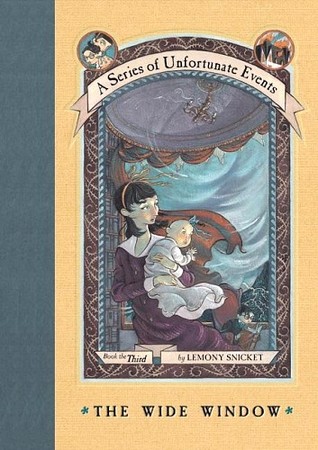
Book Review: The Wide Window (A Series of Unfortunate Events #3)

Release Date: February 25, 2000
Author: Lemony Snicket
Publisher: HarperCollins Publishers
Length: 214 pages
Source: Purchased Book

Dear Reader,

If you have not read anything about the Baudelaire orphans, then before you read even one more sentence, you should know this: Violet, Klaus, and Sunny are kindhearted and quick-witted; but their lives, I am sorry to say, are filled with bad luck and misery. All of the stories about these three children are unhappy and wretched, and this one may be the worst of them all. If you haven't got the stomach for a story that includes a hurricane, a signaling device, hungry leeches, cold cucumber soup, a horrible villain, and a doll named Pretty Penny, then this book will probably fill you with despair. I will continue to record these tragic tales, for that is what I do. You, however, should decide for yourself whether you can possibly endure this miserable story.

With all due respect,

Lemony Snicket


Review:

Protagonists: Violet, Klaus, and Sunny Baudelaire have escaped the clutches of the dastardly Count Olaf once again and this time they are sent to live with their "Aunt" Josephine, a woman scared of (nearly) everything and obsessed with proper grammar. However, once again it's not long before the villainous Count Olaf finds them wearing yet another disguise that apparently no adult can see through. It's up to the Baudelaire orphans to figure out Olaf's plans and use their extraordinary abilities to avoid being taken away by such a vile and repulsive man. I honestly don't know what to say that I haven't said in my reviews of the first two books. These characters don't really progress or change in this book in any way. They have no real development to speak of and as always they are bright and intelligent children who always seem to figure out a way to thwart their arch nemesis. I know that later in the series there will be development for these characters, and this book is rather short, but I feel like for the third book in a series, even one as long as this, that we should have seen some major development by now.

World Building: Much like with the lack of character development, there is a lack of any real world building. We do get to see a new area in this odd and enthralling timeless world the author has created. A place where if you don't wait long enough after eating and go swimming in the lake you could meet a seriously unfortunate fate. However, much like the previous installment, all you really need to know for the story to make sense is introduced in this installment. It's not as if they pretend the previous installment never happened, but if I, for whatever reason, wanted to skip the second book in this series, I could without any major penalty because the second book, and this one as well, feels very much like a sitcom. Things happen within the installment, but by the end, everything has sort of been reset. Now, I know that things from this installment and the previous one come back in the series, later on, but I wish there was something, other than Olaf chasing the children, that could have a lasting effect from book to book early on in this series because while the stories are entertaining, there isn't really any growth in the stories from book to book.

Foreshadowing: Since everything you need to know about this particular installment is introduced in this story, it's easy to see every bit of seemingly inconsequential piece of information as foreshadowing, and that's just what it is. There is foreshadowing galore in this story and while there are a few twists and turns here and there, things that are much harder to see coming, there are times when the author will tell you exactly what happens before it does. Since it has been so long since I've first read this book I can't tell you whether or not the author telling you key pieces of information before our characters find them out ruins the book in any way, but I would think not as he doesn't give everything away.
Rating:


As you can probably see I've taken out the "Ending" section because there really wasn't a use for it. Nothing of particular note happens in the end, but if and when things really start to evolve I'll add it back in. Honestly, the story of this installment is really fun, but it felt very unnecessary because we don't see, at least not immediately, the ramifications of this installment as everything is sort of reset by the end.

POST SIGNATURE

Friday, December 2, 2016

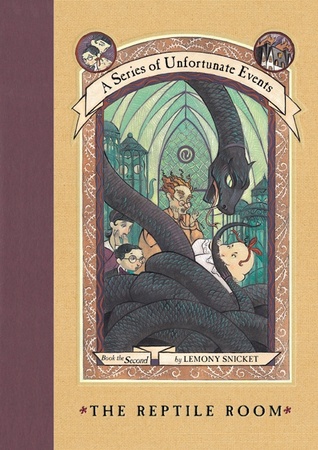
Book Review: The Reptile Room (A Series of Unfortunate Events #2)

Release Date: September 30, 1999
Author: Lemony Snicket
Publisher: HarperCollins Publishers
Length: 190 pages
Source: Purchased Book

Dear Reader,

If you have picked up this book with the hope of finding a simple and cheery tale, I'm afraid you have picked up the wrong book altogether. The story may seem cheery at first, when the Baudelaire children spend time in the company of some interesting reptiles and a giddy uncle, but don't be fooled. If you know anything at all about the unlucky Baudelaire children, you already know that even pleasant events lead down the same road to misery.

In fact, within the pages you now hold in your hands, the three siblings endure a car accident, a terrible odor, a deadly serpent, a long knife, a large brass reading lamp, and the appearance of a person they'd hoped never to see again.

I am bound to record these tragic events, but you are free to put this book back on the shelf and seek something lighter.

With all due respect,

Lemony Snicket


Review:

Protagonists: Violet, Klaus, and Sunny Baudelaire have escaped the evil clutches of Count Olaf and his dastardly plan to steal their fortune. In the process, however, Count Olaf has escaped. Hoping that their next placement will be better, and if it is, permanent, the children are delighted when their new guardian is a kind and intelligent man who is happy to help foster their own unique talents. That is until something unfortunate happens and Uncle Monty, the children's new guardian, unwittingly hires Count Olaf as his new assistant. Now the children must once again put their collective talents together and hope for a much happier ending this time around. Now, with most Middle-Grade stories this short, there isn't a lot of character development. That's mostly due to the fact that since it's so short there isn't a lot of time to have an exciting plot and develop three main characters. That being said I still enjoy these children. They're much smarter than most kids their age, sure, and the adults that aren't trying to steal their fortune are rather dense, but given that there's a lot of nostalgia when it comes to this book that's something fairly easy to overlook. Regardless, it's exciting to watch these extraordinary children try and escape from the corner Count Olaf always seems to back them into.

World Building: After the children's terrible time with Count Olaf it was nice, for however long it lasted, to see them in a loving and happy home. I love how Snicket can very easily lure the reader into a sense of false hope, that even when you know what's going to happen, that you hope beyond all hope that you're wrong. There isn't that much overall progression of the story in this book, there's still a lot of set up. We don't find out why the Baudelaires' parents want them to live with relatives, or why these relatives are ones they've never heard of. There's still a lot of questions up in the air and even though we don't find out any answers Snicket's writing is so addicting that it's hard to put the book down. Snicket's macabre, ironic, and humorously dry writing style has become iconic and it's not hard to tell why. In most books, you're rooting for a happy ending, yet in this book, you find out, right from the start, that things are not going to end in sunshine and rainbows, that by the end the Baudelaire's lives would still be unfortunate. There's something about that concept of knowing bad things are going to happen and hoping that somehow what you've been told it wrong that makes books like these, books that are so different, yet share small common tropes, that are addicting to read.

Foreshadowing: Once again, when rereading a book it's easy to see where things are going and it's so much fun to notice things you never did before. Since I'm not reading this for the first time as an adult it's hard to tell you what is or is not predictable about this book. That being said, though, I'm not sure if that would even matter as there are a few larger twists that were flat out told to the reader by the author. However, those revelations just add to the tension of the story and it's not as though he gives away the ending. In fact, it's that tension developed by those revelations that lead the urgency felt in the final act of this story. Things begin to heat up and these kids are backed into a corner with seemingly no way out and it's really here when knowing what's going to happen and would end up being a detriment, at least on your first reading. This time it was a less tense since I already knew how thigs would eventually wind up and while I can't really remember my first time reading this book, I'd have to this time was more enjoyable. It was exciting watching everything fall into place as the Baudelaire's used their combined skills to try and survive another of Count Olaf's attacks.

Ending: Looking back over this book I'm not sure where I would place the cutoff for what would begin the end. If I were reading any other book I'd say that nearly the last half is the end, because the events that transpire within the final half of this book would, given that this was a longer and more substantial book, be the actual ending, the final climax of the story followed by the traditional cooling down period. That being said this isn't any other book and I'm not quite sure where the cutoff should be, regardless the ending to this story is really built up and what it builds to, at least if you're in the appropriate age group, is amazing. As an adult it was enjoyable, and I really did like how all the pieces came together, but the ending was a tad on the predictable side.

Rating:


So I tried to be as unbiased as I possibly could, looking at this book objectively it is a fun and macabre installment in this dark and timeless series, yet there isn't all that much that happens. Things are still being set up and there isn't any real development and honestly except for one or two things in this book you could probably skip the entire thing if you wanted.

POST SIGNATURE